Blooming nanoflowers
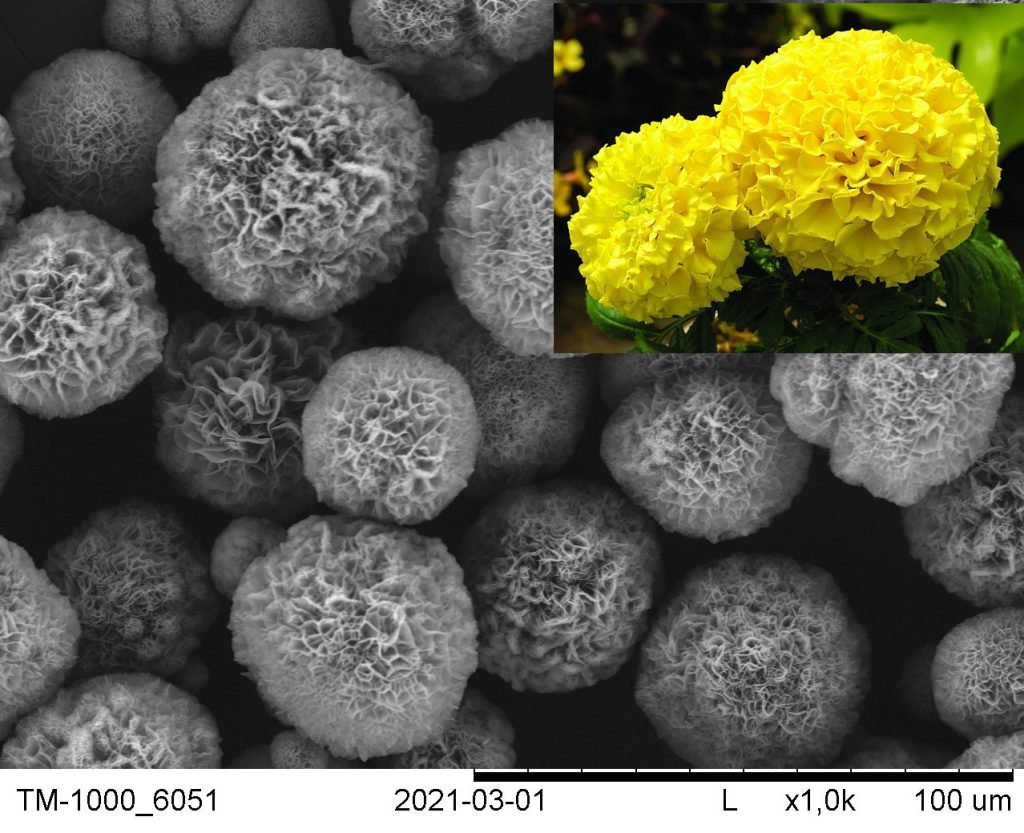
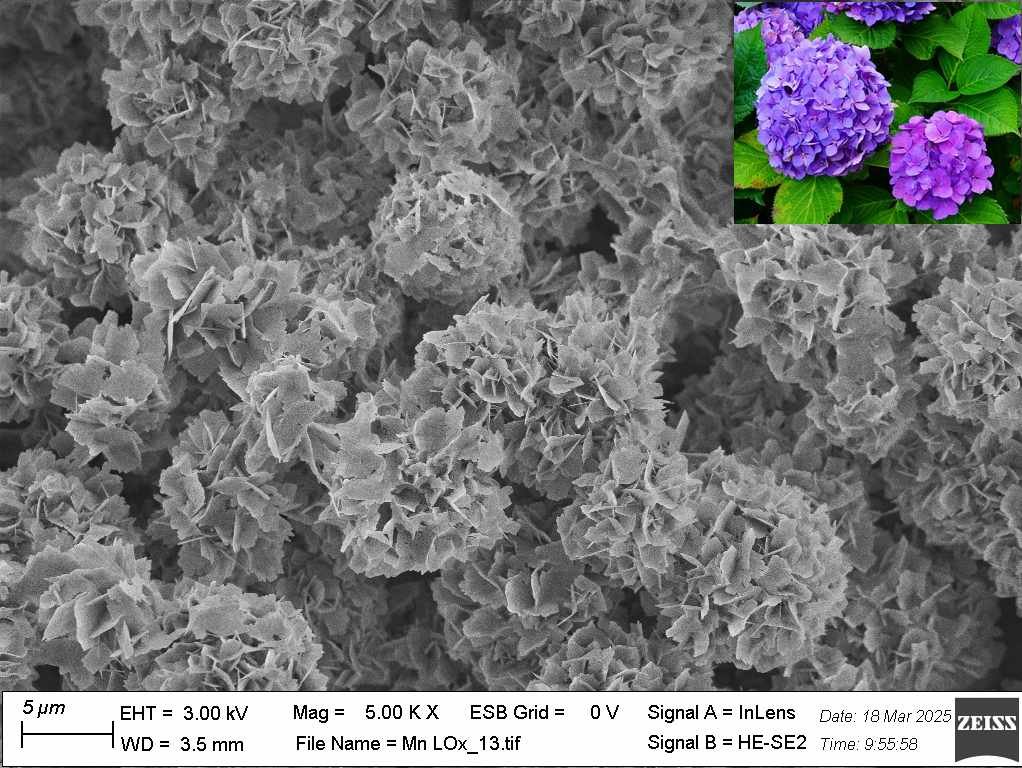
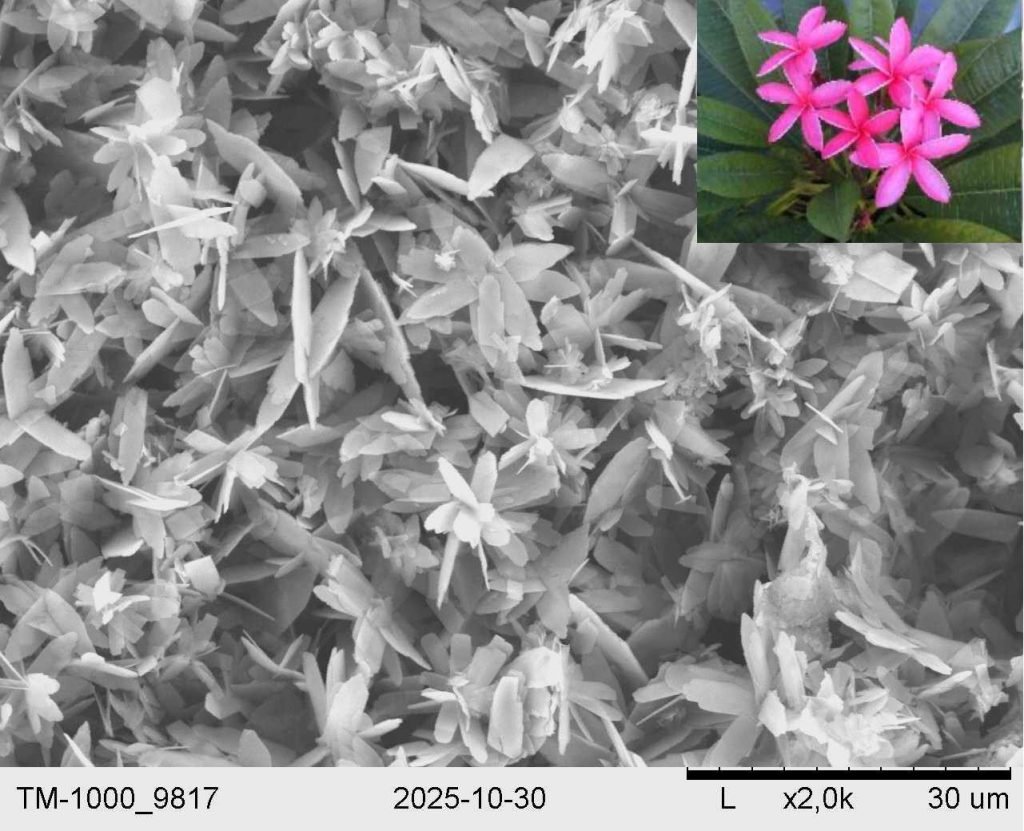
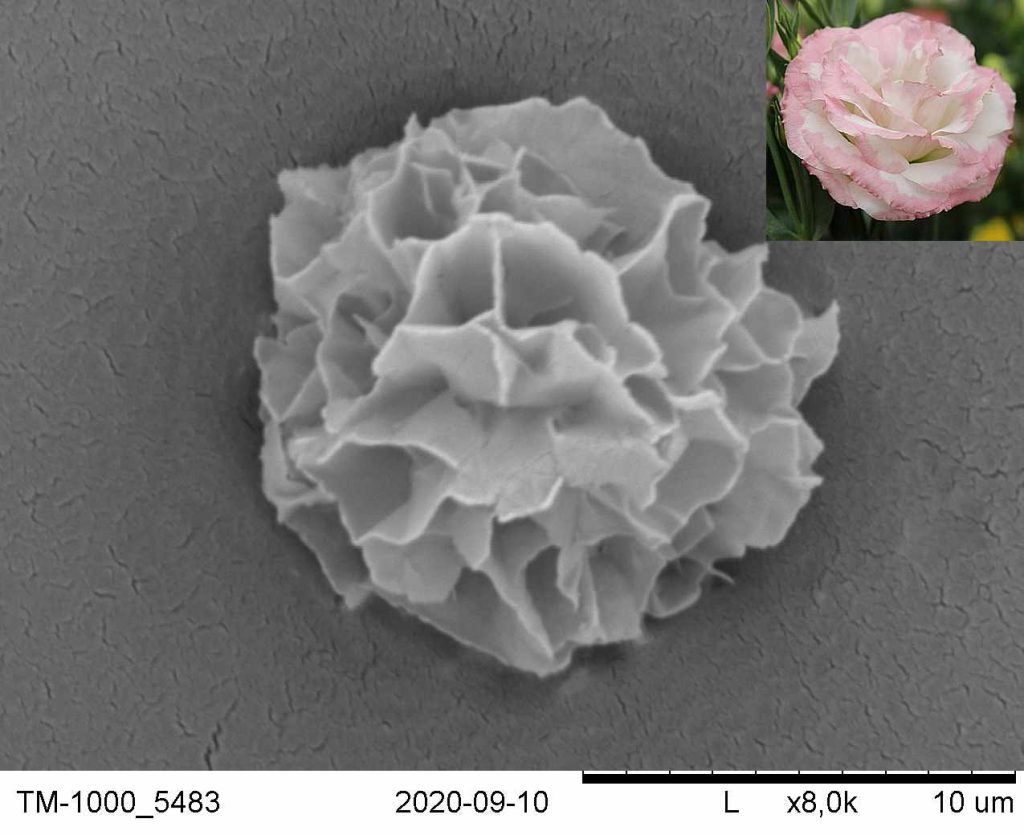
Beyond the fading autumn light, a hidden garden of scientific wonder blossoms at the nanoscale. Nanoflowers are not only visually pleasing, but thanks to their large surface area and unique physicochemical properties, they are used in catalysis, sensors, medicine, energy, and environmental cleanup.
Below are SEM images of nanoflowers composed of copper phosphate and laccase; manganese phosphate and laccase; zinc phosphate and glucose oxidase, and copper phosphate and urease.